
Owning real estate with another person can be a smart financial move until one co-owner stops acting in the best interest of the property. What often starts as tension over expenses or decision-making can quickly turn into a serious legal and financial problem when one party’s conduct begins to damage the property and erode shared equity.
In California, the law recognizes this risk and provides clear protections for co-owners whose investment is being harmed.
How Co-Owner Misconduct Happens
Problems commonly arise when one co-owner:
- Collects rent but refuses to share it
- Stops paying the mortgage, property taxes, or insurance
- Allows the property to fall into disrepair
- Lives in the property rent-free while excluding the other owner
- Makes unilateral decisions that reduce value
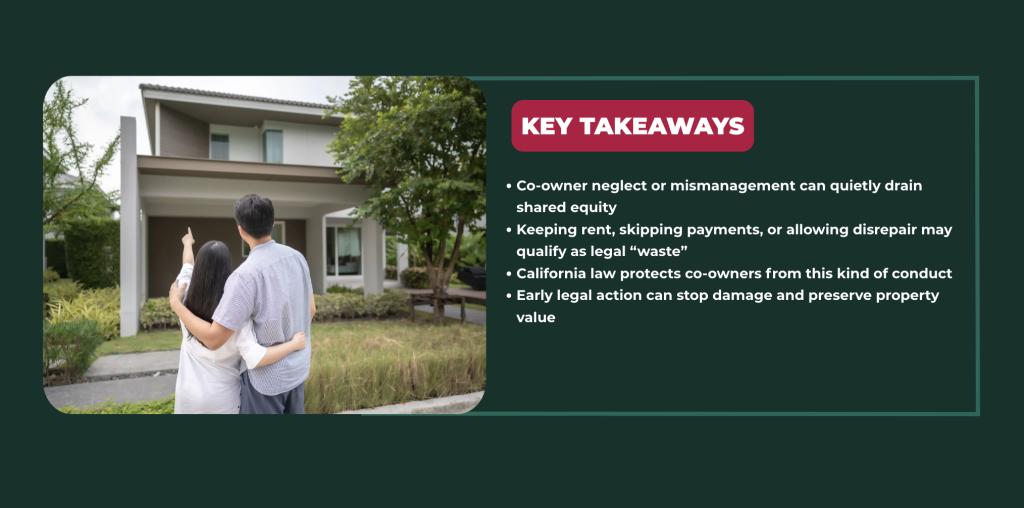
Left unchecked, this behavior can quietly drain equity and leave the responsible co-owner carrying the financial burden.
What California Law Calls “Waste”
Under California property law, waste refers to conduct by a person in possession of real property that materially damages the property or reduces its value. Importantly, waste includes not only harmful actions, but also harmful inaction such as failing to maintain the property or pay required expenses.
The purpose of the waste doctrine is to protect the reasonable expectations of all owners and prevent one party from benefiting at the expense of another.
Why This Matters Financially
Waste and mismanagement show up in real-world consequences:
- Lower market value at sale
- Increased repair costs
- Tax liens or penalties
- Reduced net proceeds when the property is divided
California courts recognize that willful mismanagement or neglect can constitute bad faith and justify legal intervention.
Legal Options for Protecting Your Investment
When co-owners cannot agree, California law allows:
- Accounting to track rent and expenses
- Court intervention to stop ongoing harm
- Partition actions to divide or sell the property fairly
Taking action early is key to preserving equity before the damage becomes permanent.